
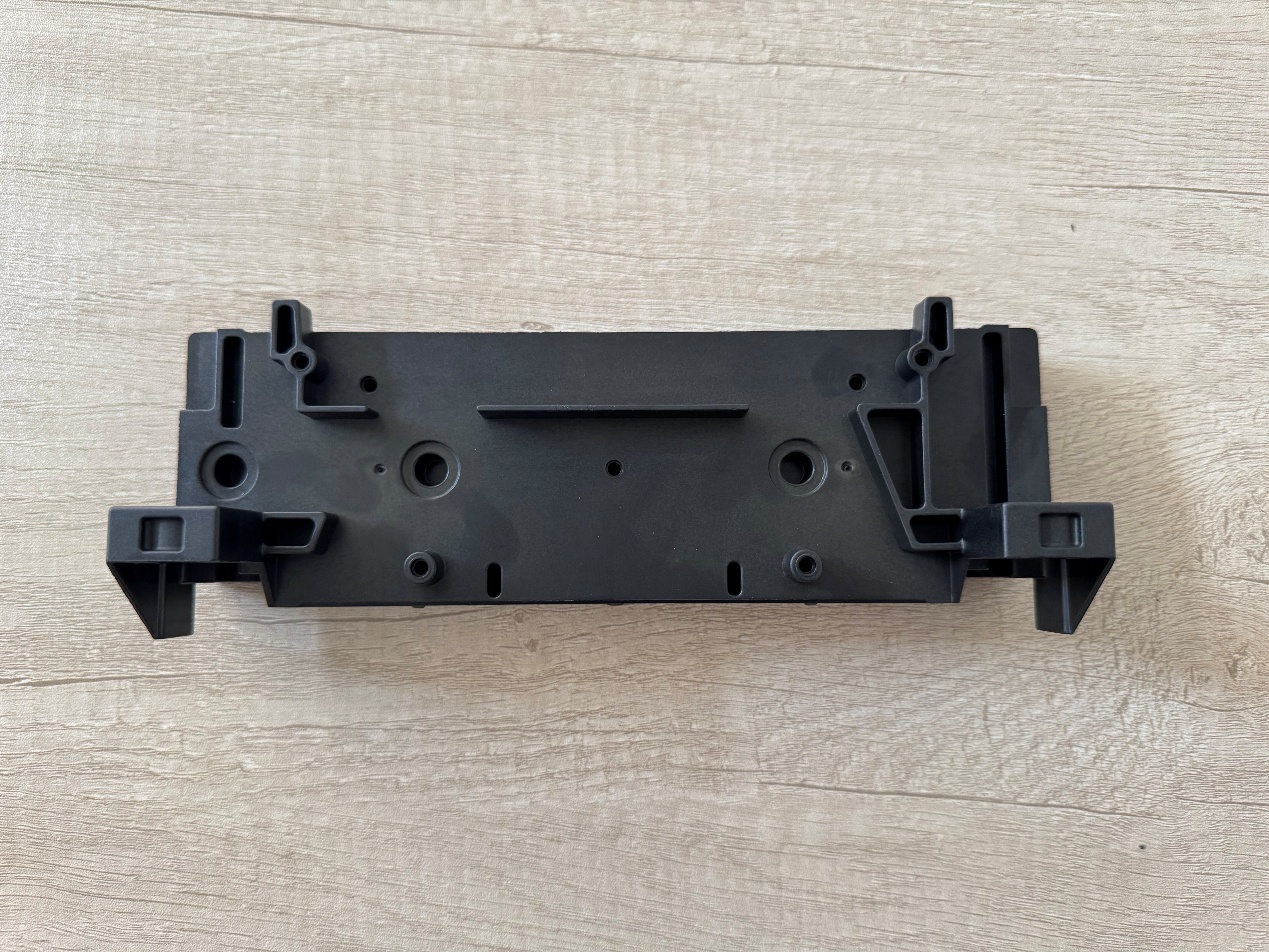
PBT (Polybutylene Terephthalate) is a semi-crystalline thermoplastic polyester known for high mechanical strength, excellent electrical insulation, thermal stability, low moisture absorption, and rapid crystallization for fast processing. It plays a very important role in plastic injection molding industries.
Properties
Mechanical Properties
PBT offers high strength, excellent fatigue resistance, good dimensional stability, and low creep, with minimal deformation even under high-temperature conditions.
Heat Aging Resistance
Reinforced PBT grades can achieve a UL temperature index of 120-140°C and also exhibit excellent long-term outdoor aging resistance.
Solvent Resistance
PBT is resistant to stress cracking.
Water Stability
PBT is susceptible to hydrolysis when exposed to moisture, so caution is required in high-temperature and high-humidity environments.
Electrical Properties
PBT provides excellent insulation performance, maintaining stable electrical properties even under humid and high-temperature conditions. This makes it an ideal material for electronic and electrical components.
Typical electrical characteristics include:
- Dielectric constant: 3.0-3.2
- Arc resistance: 120 seconds
Processing Characteristics
PBT can be injection molded or extruded using conventional equipment. Due to its fast crystallization rate and good flowability, the required mold temperature is lower than that of many other engineering plastics. Thin-walled parts can be molded within only a few seconds, while even large parts generally require only 40-60 seconds.
Applications of PBT
PBT is commonly used in modified grades for electronics, automotive components, and mechanical equipment.
Electronics and Electrical Appliances
Typical applications include connectors, switch components, household appliance parts, small motor covers, and similar products requiring heat resistance, flame retardancy, electrical insulation, and good processability.
Automotive Applications
PBT is used in a range of automotive parts, including:
- Exterior parts: corner grilles, engine ventilation covers, and similar components
- Interior components: interior mirror brackets, wiper brackets, and control system valves
- Automotive electrical components: ignition coil bobbins, various electrical connectors, and related components
The amount of PBT used in automobiles is still lower than that of nylon, polycarbonate, and polyoxymethylene. However, with the development of low-warpage PBT materials, its use in automotive components is expected to increase further.
Mechanical Equipment
PBT can be used for belt drive shafts for video tape recorders, computer housings, mercury lamp covers, electric iron housings, oven components, and a large number of gears, cams, buttons, electronic watch housings, and camera parts requiring heat resistance and flame retardancy.
Processing Conditions
Drying
PBT is highly susceptible to hydrolysis at elevated temperatures, making pre-drying essential before processing. Recommended air-drying conditions are 120°C for 6-8 hours or 150°C for 2-4 hours. Moisture content should be maintained below 0.03%.
If a desiccant dryer is used, the recommended drying condition is 150°C for 2.5 hours.
Melt Temperature
The typical melt temperature range is 225-275°C, with a recommended temperature of 250°C.
Mold Temperature
For unreinforced grades, the mold temperature is usually 40-60°C. Mold cooling channels should be carefully designed to minimize warpage of molded parts. Heat dissipation should be rapid and uniform. A cooling channel diameter of 12 mm is recommended.
Injection Molding Pressure
Moderate injection molding pressure is recommended, up to 1500 bar.
Injection Speed
The highest possible injection speed is recommended because PBT solidifies rapidly.
Runners and Gates
Circular runners are recommended to improve pressure transmission. A common empirical formula is:
runner diameter = part thickness + 1.5 mmVarious gate designs may be used. Hot-runner systems are also applicable, but care should be taken to prevent material leakage and degradation.
Gate diameter should be 0.8-1.0t, where t represents part thickness. For submarine gates, a minimum diameter of 0.75 mm is recommended.